What Was Cannazon Market
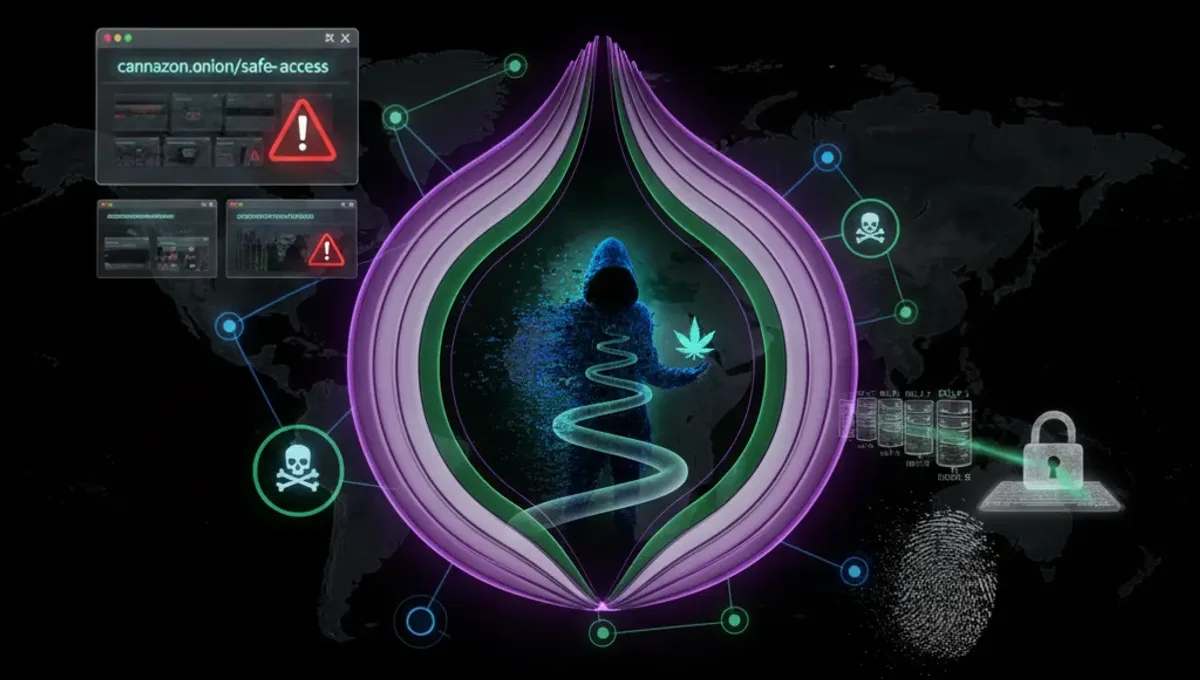
Cannazon operated as a cannabis-focused darknet marketplace accessible through Tor browser via .onion addresses. The platform emerged around 2019 and attracted users seeking cannabis products across multiple jurisdictions. Like other darknet markets, Cannazon used cryptocurrency for transactions and employed escrow systems to mediate buyer-seller disputes. The marketplace maintained vendor ratings and user reviews, though these systems were vulnerable to manipulation and fraud. Cannazon's closure in 2021 followed a pattern common to darknet markets: operational instability, law enforcement pressure, and exit scams where administrators disappeared with user funds. The market's shutdown illustrates why darknet marketplace users face constant risk of losing access to funds or having personal information compromised.
How Darknet Markets Operate on Tor
Darknet markets function as websites hosted on the Tor network, accessed exclusively through Tor browser. These sites use .onion addresses—special domain names that route traffic through multiple Tor relays, encrypting data at each hop. When you connect to a darknet market, your IP address remains hidden because Tor strips identifying information from your traffic. Markets like Cannazon employed multi-signature cryptocurrency wallets to hold escrow funds during transactions. The Tor routing process ensures that neither the market operator nor law enforcement can easily identify users by their network activity alone. However, operational security failures by users—such as reusing usernames, uploading unredacted files, or revealing personal details—can compromise anonymity regardless of Tor's technical protections. Darknet markets also depend on vendor reputation systems, though these can be gamed through fake reviews or compromised vendor accounts.
Why Darknet Markets Like Cannazon Shut Down
Cannazon and similar platforms face multiple pressures that lead to closure. Law enforcement agencies across jurisdictions conduct investigations targeting marketplace operators, often resulting in arrests and server seizures. Financial instability occurs when markets suffer distributed denial-of-service attacks or when administrators mismanage cryptocurrency reserves. Exit scams represent another common failure mode: operators suddenly disappear after withdrawing all escrow funds, leaving users unable to recover their money. Cannazon specifically experienced increasing technical problems and vendor disputes before its final shutdown. Marketplace closures create cascading effects—users lose access to their accounts and funds, vendors lose sales channels, and the community fragments across replacement platforms. The 2022 darknet market landscape continued this pattern, with established markets regularly disappearing and new ones emerging to fill the void. This cycle of instability makes darknet markets inherently risky for any transaction.
Recognizing Phishing Clones and Fraud
After Cannazon's closure, scammers created fake mirrors and phishing sites claiming to be the original market or its successor. These clones redirect users to fraudulent sites designed to steal login credentials, cryptocurrency, or personal information. Legitimate darknet markets publish their official .onion addresses on multiple channels and use PGP-signed announcements to verify authenticity. To verify a genuine onion address, users should check official project documentation and cross-reference addresses across independent sources. Phishing clones typically appear identical to the original but use slightly different .onion addresses—for example, substituting similar-looking characters. Users who enter credentials into a phishing clone immediately lose access to their accounts on the real market. The safest approach is to bookmark official .onion addresses directly from verified sources and never click links from third-party forums or social media. If a market suddenly becomes inaccessible, verify its status through multiple independent channels before attempting to access replacement sites.
Operational Security Mistakes That Compromise Anonymity
Users of darknet markets commonly make mistakes that undermine Tor's anonymity protections. Reusing usernames across multiple platforms allows attackers to correlate accounts and build profiles of user activity. Uploading files without removing metadata—such as photos with embedded location data—can expose real-world information. Revealing personal details in messages, even seemingly innocuous information like timezone or language preferences, helps adversaries narrow down user identity. Running Tor browser alongside other applications that leak IP addresses, such as torrenting clients, defeats encryption entirely. Maximizing browser windows to full screen can allow website fingerprinting attacks that identify users based on screen resolution. Mixing darknet and clearnet activities under the same identity creates a permanent link between anonymous and identified personas. Cannazon users who made these mistakes remained vulnerable even though Tor itself functioned correctly. Law enforcement has successfully identified darknet market users through operational security failures rather than breaking Tor's encryption.
Comparing Tor, VPN, and I2P for Anonymity
Tor, VPN, and I2P represent different approaches to network anonymity, each with distinct tradeoffs. Tor routes traffic through multiple volunteer-operated relays, making it difficult for any single entity to correlate user identity with activity. VPN services encrypt traffic and route it through a single provider's server, offering privacy from ISPs but requiring trust in the VPN operator. I2P uses a similar multi-hop routing approach to Tor but was designed primarily for internal network communication rather than accessing external websites. Tor provides the strongest anonymity for accessing darknet markets because it was specifically designed for this use case and benefits from a large user base that provides cover traffic. VPNs offer faster speeds than Tor but provide weaker anonymity guarantees and are more vulnerable to law enforcement cooperation with VPN providers. I2P offers good anonymity for internal communication but lacks the infrastructure for reliably accessing external websites. Darknet market users typically rely on Tor exclusively rather than combining it with VPN, as this can introduce additional vulnerabilities. Each technology has legitimate uses, but Tor remains the standard for accessing darknet services.
What Happened After Cannazon Closed
Following Cannazon's shutdown, users migrated to other established darknet markets and newly launched platforms. The 2022 darknet market landscape included platforms like Aero Market and others that attempted to capture Cannazon's user base. However, each successive market closure reinforces the fundamental instability of darknet commerce. Users who stored significant funds on Cannazon lost access permanently when the market disappeared. Vendors who relied on Cannazon for sales had to rebuild reputation on replacement platforms from zero. The market's closure demonstrated that no darknet marketplace offers reliable long-term stability or legal protection for users. Law enforcement continues to target darknet markets through technical investigation, undercover operations, and international cooperation. The cycle of market creation, growth, and shutdown continues as new platforms emerge to replace closed ones. Users should understand that participation in darknet markets carries inherent risks regardless of which platform they use, including potential loss of funds, legal consequences, and identity compromise.
Frequently asked questions
Is Cannazon still operating
No, Cannazon ceased operations in 2021. The marketplace is no longer accessible, and users cannot recover funds or access accounts. Scammers have created phishing clones claiming to be Cannazon or its successor, but these are fraudulent sites designed to steal credentials and cryptocurrency. Users should verify any marketplace claims through independent sources before attempting to access them.
How did Cannazon users lose their money
Cannazon users lost funds through multiple mechanisms: the market's sudden closure trapped escrow funds, exit scams where operators disappeared with cryptocurrency, phishing clones that stole credentials, and law enforcement seizures of market servers. Users who had cryptocurrency stored on the platform had no way to withdraw it after shutdown. This illustrates why storing significant funds on any darknet marketplace carries extreme risk.
Can law enforcement trace Tor darknet market activity
Law enforcement cannot easily trace Tor traffic itself, but they successfully identify darknet market users through operational security failures, financial investigation, and undercover operations. Users who reuse usernames, upload files with metadata, or reveal personal information compromise their anonymity. Cryptocurrency transactions, while pseudonymous, can be traced through blockchain analysis when users convert to fiat currency or use exchange services.
What should I do if I lost money on Cannazon
If you lost funds on Cannazon, you have limited legal recourse since darknet markets operate outside regulated financial systems. Report the loss to law enforcement if you believe it resulted from criminal activity. Do not attempt to access phishing clones or successor sites claiming to recover your funds, as these are scams. Focus on protecting remaining cryptocurrency by using secure wallets and strong operational security practices.
Are there safer alternatives to darknet markets
Darknet markets inherently carry risks including loss of funds, legal consequences, and identity compromise. No darknet marketplace offers reliable stability or legal protection. Users seeking cannabis or other products should understand their local laws and consider legal alternatives where available. If you choose to use any darknet platform, understand that you accept the risk of total fund loss and potential law enforcement action.