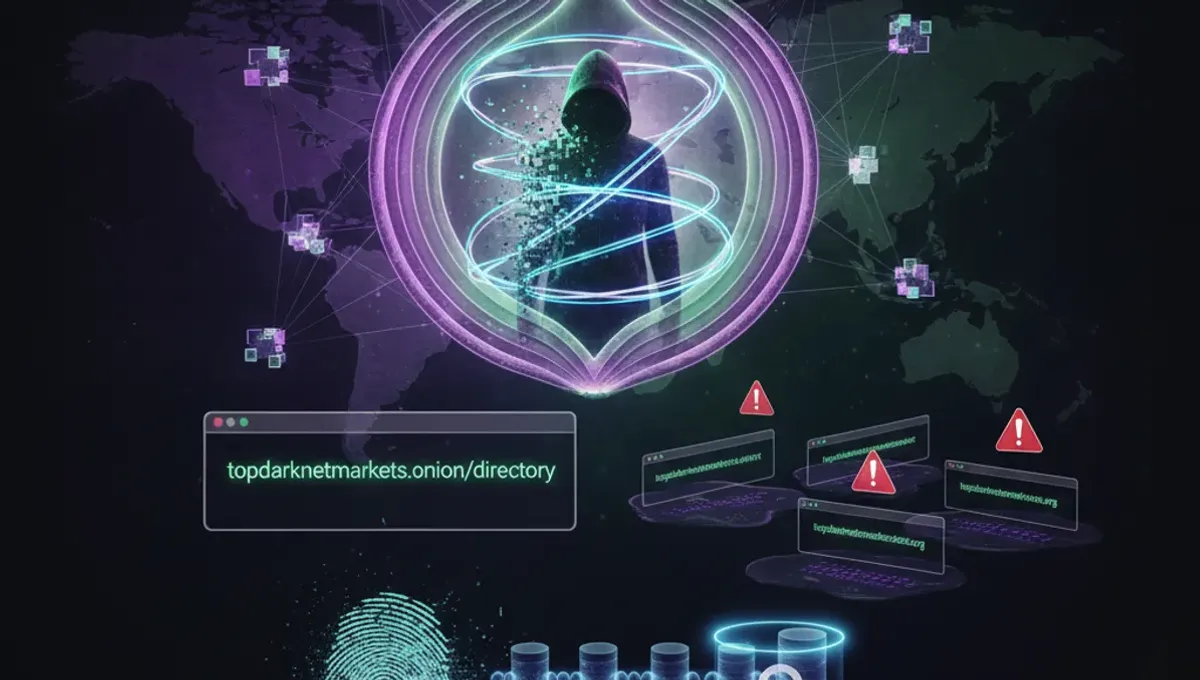
What Are Darknet Markets and How Do They Operate
Darknet markets are decentralized or centralized platforms hosted on hidden Tor services, identified by v3 .onion addresses. Unlike surface web marketplaces, they require the Tor browser to access and typically employ multi-signature escrow systems to mediate transactions between buyers and sellers. Most operate as reputation-based communities where vendor and buyer ratings influence trust. The infrastructure relies on Tor's onion routing protocol, which encrypts traffic through multiple relays, obscuring user IP addresses and location data. Markets vary in their moderation policies, dispute resolution mechanisms, and technical security implementations. Some maintain public forums for community discussion, while others operate with minimal transparency. The operational model typically involves vendors listing goods, buyers placing orders, and the platform holding funds in escrow until transaction completion. Exit scams—where administrators abscond with held funds—remain a persistent risk in this ecosystem.
How Tor Routing and Onion Addresses Enable Marketplace Access
Tor routes traffic through a minimum of three encrypted relays before reaching the destination server, preventing any single point from correlating your IP address with your activity. Onion addresses are 56-character v3 identifiers (the current standard) that represent hidden services, derived from the service's public key. When you connect to a .onion address, your Tor client performs a multi-step process: it retrieves the service descriptor from the distributed hash table, establishes a circuit through Tor relays, and creates a rendezvous point for communication. This architecture means the marketplace operator cannot see your real IP, and your ISP cannot see that you are accessing Tor—only that you are using Tor. The encryption is end-to-end; even Tor exit nodes (which handle surface web traffic) are bypassed entirely for .onion services. This technical design is why darknet markets rely on Tor: it provides the anonymity layer necessary for both legitimate privacy-focused commerce and illicit activity. Understanding this routing prevents common mistakes, such as assuming Tor alone guarantees anonymity without proper operational security.
Verifying Authentic Onion Addresses and Detecting Phishing Clones
Phishing clones are fraudulent copies of legitimate marketplace .onion addresses, designed to steal credentials, cryptocurrency, or personal data. Distinguishing genuine addresses from fakes requires multiple verification steps. First, obtain the marketplace address only from official sources: the project's verified social media accounts, PGP-signed announcements, or established community directories. Do not click links in forum posts or emails without independent verification. Second, verify PGP signatures on any official communication; this confirms the message originates from the marketplace operator's private key. Third, examine the .onion address itself: v3 addresses are 56 characters long and use only lowercase letters and numbers. A slight misspelling (for example, replacing the letter 'o' with the number '0') is a common phishing tactic. Fourth, check the SSL certificate presented by the marketplace; legitimate operations display security information in the Tor browser's address bar. Fifth, compare the marketplace's interface, layout, and terminology with archived screenshots or descriptions from trusted sources. Phishing sites often contain subtle UI differences, broken links, or unusual language. If you have accessed a marketplace before, bookmark the .onion address in your browser to avoid retyping it and reduce phishing risk.
Essential Operational Security Practices for Marketplace Users
Operational security (OpSec) encompasses the practices that prevent your identity, location, or activity from being compromised. When using darknet markets, several critical measures apply. First, use a dedicated device or virtual machine running a fresh operating system, isolated from your regular computing environment. This prevents malware or browser exploits from accessing your personal files or other accounts. Second, disable JavaScript in the Tor browser settings; while this breaks some website functionality, it prevents certain deanonymization attacks. Third, never maximize your browser window; fingerprinting scripts can infer your screen resolution and other hardware details to track you across sessions. Fourth, do not enable plugins or extensions in Tor browser; they can bypass Tor routing. Fifth, assume all marketplace communications are monitored by law enforcement in jurisdictions where such monitoring is legal. Do not use usernames, email addresses, or writing styles that link to your real identity. Sixth, use a dedicated cryptocurrency wallet for marketplace transactions, never reusing addresses across multiple purchases. Seventh, do not assume the marketplace itself is secure; assume the operator may be compromised, the platform may be seized, or the service may be a honeypot. Treat every transaction as if it could be traced.
Comparing Tor, VPN, and I2P for Anonymity and Privacy
Tor, VPN, and I2P are three distinct technologies offering different anonymity and privacy models. Tor routes traffic through multiple relays operated by volunteers worldwide, providing strong anonymity for accessing .onion services and surface web content. The trade-off is slower speeds due to multiple hops. VPN services encrypt traffic and route it through a single provider's server, hiding your IP from websites but concentrating trust in the VPN operator. VPNs are faster than Tor but offer weaker anonymity; the VPN provider can see your traffic and IP address. I2P (Invisible Internet Project) is a decentralized network similar to Tor but optimized for internal I2P services rather than accessing the surface web. I2P uses shorter tunnels and is faster than Tor for I2P-to-I2P communication, but has a smaller user base and less mature security auditing. For darknet marketplaces, Tor is the standard because .onion services are designed to work with Tor's routing protocol. Using a VPN with Tor adds a layer of encryption but does not improve anonymity against a determined adversary and may introduce new vulnerabilities. I2P cannot access .onion addresses; it is a separate network. Each technology serves different use cases; none is universally superior.
Common Mistakes That Compromise User Anonymity
Several behavioral and technical errors undermine the anonymity provided by Tor and darknet marketplaces. First, reusing usernames across platforms allows correlation attacks; an adversary can link your marketplace account to your surface web identity. Second, providing personal information in marketplace profiles, messages, or transactions creates a direct link to your real identity. Third, maximizing the browser window or enabling plugins allows fingerprinting and deanonymization. Fourth, using the same cryptocurrency address for multiple transactions enables blockchain analysis to link purchases to a single entity. Fifth, accessing the marketplace from the same device and network as your regular internet activity allows ISP or network-level monitoring to correlate your Tor usage with your identity. Sixth, disabling Tor browser security features for convenience (such as allowing JavaScript or plugins) introduces attack vectors. Seventh, assuming the marketplace operator is trustworthy; many operators have been arrested or have conducted exit scams. Eighth, failing to verify marketplace addresses before accessing them exposes you to phishing attacks. Ninth, discussing marketplace activity in forums, social media, or with others creates a paper trail. Tenth, using weak or reused passwords allows account takeover. These mistakes are often more damaging than technical vulnerabilities in Tor itself.
Legal and Regulatory Considerations for Darknet Market Access
The legal status of accessing darknet markets varies by jurisdiction and depends on the specific goods or services involved. In most countries, accessing Tor and .onion services is legal; Tor browser is open-source software with legitimate privacy applications. However, using darknet markets to purchase prohibited items—such as drugs, weapons, or stolen data—is illegal in virtually all jurisdictions. Law enforcement agencies worldwide have successfully prosecuted marketplace operators and users based on transaction records, cryptocurrency tracing, and operational security failures. Prosecution typically requires evidence of intent to purchase illegal goods, not merely accessing a marketplace. Some jurisdictions have laws specifically targeting darknet market operators or facilitating illegal commerce. The anonymity provided by Tor and marketplaces is not absolute; determined law enforcement with resources can deanonymize users through technical analysis, metadata correlation, or infiltration of marketplace infrastructure. Cryptocurrency transactions, while pseudonymous, are traceable on public blockchains; law enforcement and private blockchain analysis firms routinely track funds. Users should understand that accessing darknet markets for illegal purposes carries significant legal risk, and the anonymity provided by Tor is not a guarantee of immunity from prosecution.
Frequently asked questions
Are darknet markets legal to access
Accessing Tor and .onion services is legal in most countries. However, using darknet markets to purchase illegal goods or services is not legal. The legality depends on your jurisdiction and the specific items involved. Law enforcement can and does prosecute users who engage in illegal transactions on darknet markets.
How do I verify a legitimate darknet marketplace address
Obtain the address only from official sources: the project's verified social media, PGP-signed announcements, or trusted community directories. Verify PGP signatures on official communications. Check that v3 addresses are 56 characters long with lowercase letters and numbers only. Compare the interface with archived screenshots. Never click marketplace links in forum posts without independent verification.
What is the difference between Tor and a VPN for marketplace access
Tor routes traffic through multiple volunteer-operated relays, providing stronger anonymity but slower speeds. VPNs route traffic through a single provider's server, offering faster speeds but weaker anonymity and requiring trust in the VPN operator. Darknet marketplaces are designed for Tor; VPNs cannot access .onion services directly.
Can law enforcement trace darknet marketplace transactions
Yes. Law enforcement uses blockchain analysis to trace cryptocurrency transactions, technical analysis to deanonymize users, and infiltration of marketplace infrastructure. Operational security failures—such as reusing usernames, providing personal information, or using weak passwords—make tracing easier. Tor and marketplace anonymity are not absolute protections.
What is an exit scam on darknet markets
An exit scam occurs when a marketplace operator absconds with funds held in escrow, typically after accumulating significant balances. Users lose their cryptocurrency and any pending orders. This is a persistent risk in the darknet marketplace ecosystem; no marketplace is immune to operator compromise or intentional fraud.