What Was Silkkitie and How Did Its Onion Address Work
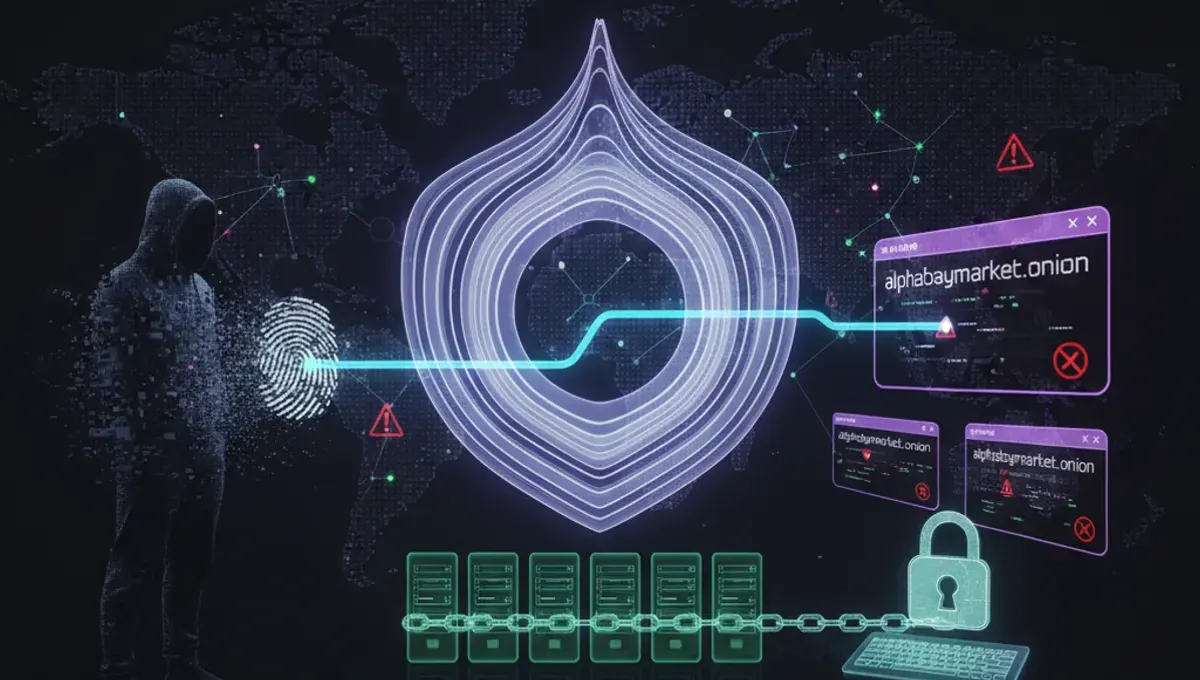
Silkkitie functioned as a marketplace accessible only through Tor, using a .onion address that routed traffic through multiple Tor nodes to conceal user location and identity. The marketplace operated with a v2 onion address format, a 16-character alphanumeric string generated through Tor's hidden service protocol. Like other darknet markets, Silkkitie relied on the Tor network's three-hop circuit architecture: the user connects to an entry node, then a middle relay, then an exit node, with each hop aware only of the previous and next relay. The .onion address itself was derived from the marketplace's public key, making it mathematically tied to the server's identity. This design meant the address could not be spoofed without controlling the actual server infrastructure, though phishing clones with visually similar URLs remained a persistent threat.
How to Verify an Onion Address and Detect Phishing Clones
Verifying a legitimate onion address requires multiple checks beyond visual inspection. First, obtain the address only from trusted sources such as official project documentation, verified community forums, or PGP-signed announcements from the marketplace operator. Phishing clones often use URLs that differ by a single character or substitute visually similar letters (for example, replacing the number 1 with the letter l). Compare the full address character-by-character against multiple independent sources. Check whether the site displays a valid Tor browser security indicator and loads without certificate warnings. Legitimate marketplaces often publish their onion address alongside a PGP signature; verify this signature using the operator's public key to confirm authenticity. If the marketplace has migrated or announced a new address, look for official announcements signed with the same PGP key used previously. Be cautious of any marketplace claiming to be Silkkitie or similar services, as many historical markets no longer operate and their domains are frequently impersonated.
Understanding v2 vs v3 Onion Addresses and Security Implications
Silkkitie used v2 onion addresses, a 16-character format based on RSA-1024 encryption. The Tor Project deprecated v2 addresses in 2021 due to cryptographic weaknesses; v2 addresses are vulnerable to brute-force attacks and offer less resistance to adversarial enumeration compared to v3 addresses. V3 addresses, introduced in 2017, use 56 characters and are based on ed25519 elliptic-curve cryptography, providing significantly stronger security. Any active marketplace should now operate with a v3 address. If you encounter a marketplace claiming to be Silkkitie or a similar service using a v2 address, this is a strong indicator that the site is either abandoned or a phishing clone. The transition from v2 to v3 represents a fundamental security upgrade; legitimate operators migrated their services years ago. Check the Tor Project's official documentation for the technical differences between these address formats and why v3 adoption is critical for user safety.
Common Mistakes That Compromise Anonymity When Accessing Onion Sites
Users frequently compromise their anonymity through preventable errors. Resizing the Tor browser window can allow websites to fingerprint your browser based on screen dimensions; keep the default window size. Disabling JavaScript or using browser extensions can leak your real IP address or create identifiable patterns. Logging into personal accounts (email, social media) while using Tor defeats anonymity by linking your online activity to your real identity. Torrenting over Tor is ineffective because BitTorrent protocols bypass Tor entirely and expose your IP address directly. Maximizing the browser window or using full-screen mode increases the surface area for fingerprinting attacks. Visiting both clearnet and onion sites in the same Tor session can create timing correlations that deanonymize you. Always use Tor Browser's default security settings and avoid customizing privacy configurations unless you understand the implications. For marketplace access, use a dedicated virtual machine or operating system to isolate your Tor activity from other internet use.
Comparing Tor, VPN, and I2P for Darknet Access
Tor, VPN, and I2P serve different purposes in anonymous communication. Tor routes traffic through three independent relays operated by volunteers worldwide, with no single entity controlling your entire circuit; it is specifically designed for accessing hidden services and provides strong anonymity guarantees. VPNs encrypt traffic to a single provider's server, which then connects to the clearnet; they are useful for privacy against your ISP but do not provide anonymity if the VPN provider is compromised or cooperates with authorities. I2P uses a similar multi-hop routing model to Tor but is optimized for internal network communication rather than accessing external websites. For accessing .onion marketplaces, Tor is the only practical choice because onion addresses are only reachable through the Tor network. VPNs cannot access .onion sites and should not be used as a substitute for Tor. I2P has a smaller user base and fewer hidden services. Using Tor Browser is the standard approach; combining Tor with a VPN adds complexity without meaningfully improving security for onion access and may introduce new vulnerabilities.
Why Marketplace URLs Change and How to Stay Updated Safely
Darknet marketplaces frequently change URLs due to law enforcement takedowns, server migrations, or operator decisions to reset the marketplace identity. When a marketplace is seized, its .onion address becomes inaccessible; operators sometimes launch new instances with different addresses to resume operations. Phishing actors exploit these transitions by publishing fake new addresses to redirect users to fraudulent sites. To stay updated safely, subscribe only to official announcement channels verified through PGP signatures. Check community forums and aggregator sites that track marketplace status, but cross-reference any new address against multiple independent sources. Official marketplace operators typically announce migrations through their existing communication channels and sign announcements with their established PGP key. If you cannot verify a new address through at least two independent trusted sources, assume it is a phishing clone. For historical marketplaces like Silkkitie that no longer operate, any current URL claiming to be the original service is almost certainly fraudulent. Refer to verified marketplace directories maintained by the darknet community for current, authenticated marketplace information.
OpSec Fundamentals for Safe Onion Marketplace Access
Operational security for darknet marketplace access requires discipline across multiple layers. Use a dedicated device or virtual machine isolated from your primary computer to prevent cross-contamination of browsing history and system files. Keep your operating system and Tor Browser fully updated; security patches address known vulnerabilities that could expose your identity. Disable plugins, extensions, and unnecessary services that could leak data or create fingerprinting vectors. Use strong, unique passwords for marketplace accounts and consider using a password manager isolated to your Tor environment. Never maximize your browser window or adjust display settings that could enable browser fingerprinting. Avoid taking screenshots or downloading files from marketplaces without understanding the risks; metadata in files can reveal your real location. Do not mix Tor and non-Tor traffic on the same device during the same session. Use a firewall to block non-Tor traffic if possible. Assume that any marketplace could be compromised or operated by law enforcement; never trust marketplace security as a substitute for your own OpSec practices.
Frequently asked questions
Is Silkkitie market still active and accessible
Silkkitie is no longer operational. The marketplace was shut down years ago, and any current URL claiming to be Silkkitie is a phishing clone designed to steal credentials or funds. Do not attempt to access any site claiming to be the original Silkkitie marketplace. For current, verified marketplaces, consult the Verified Marketplaces page on this site.
How can I tell if an onion address is legitimate or a phishing clone
Verify the address against multiple independent trusted sources and check for an official PGP signature from the marketplace operator. Compare the full address character-by-character; phishing clones often substitute similar-looking characters. Legitimate marketplaces publish their addresses through official channels only. If the address uses a deprecated v2 format, it is likely abandoned or fraudulent. Never access a marketplace based on a single source or an address you cannot independently verify.
What is the difference between v2 and v3 onion addresses
V2 addresses are 16 characters and use RSA-1024 encryption; they were deprecated in 2021 due to cryptographic weaknesses. V3 addresses are 56 characters and use ed25519 elliptic-curve cryptography, providing significantly stronger security. Any active marketplace should operate with a v3 address. If a marketplace uses v2, it is either abandoned or a phishing clone.
Can I use a VPN instead of Tor to access darknet marketplaces
No. VPNs cannot access .onion addresses because onion sites are only reachable through the Tor network. VPNs route traffic to a single provider's server, which cannot connect to hidden services. Use Tor Browser to access onion marketplaces. Combining Tor with a VPN adds complexity without improving security for onion access and may introduce new vulnerabilities.
What are the most common mistakes that compromise anonymity on Tor
Common mistakes include resizing the browser window, disabling JavaScript, logging into personal accounts, torrenting over Tor, and visiting both clearnet and onion sites in the same session. Each of these actions can leak your IP address or create identifiable patterns that deanonymize you. Use Tor Browser's default settings, keep your window at default size, and isolate Tor activity from other internet use.