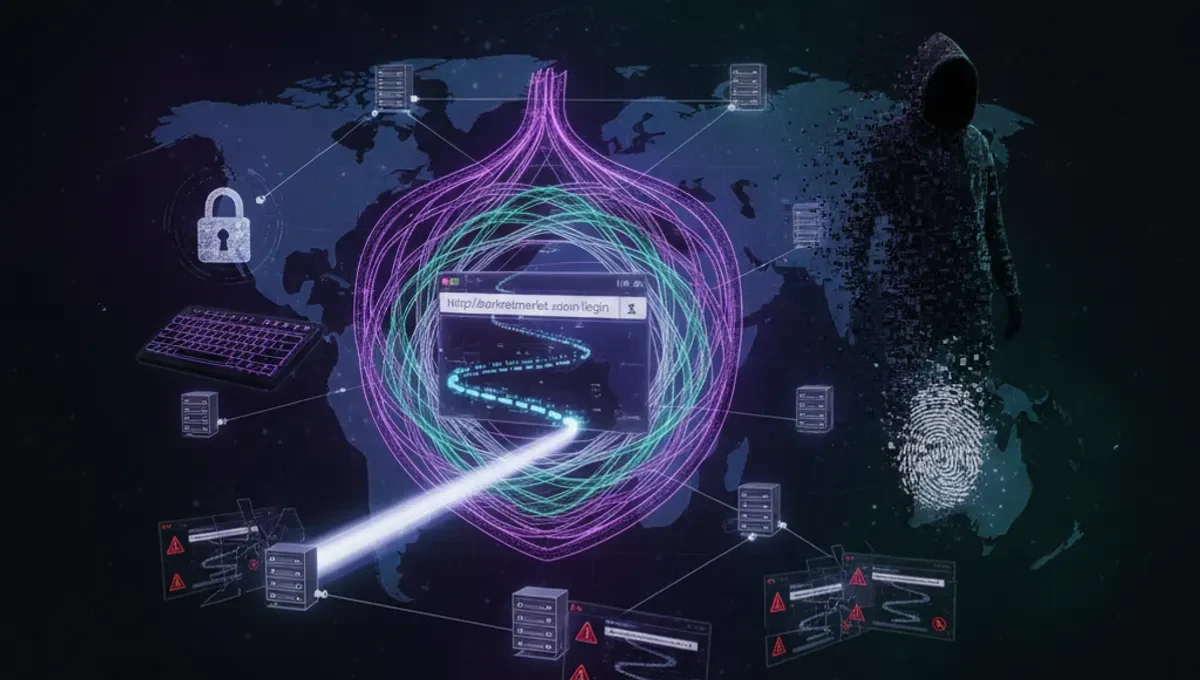
What Was Versus Project Market?
Versus Project was a darknet marketplace accessible via Tor that facilitated transactions between buyers and sellers using cryptocurrency. The platform operated on the principle of distributed trust, where user reputation and escrow systems provided some protection against fraud. Like other onion markets, it required users to access it through the Tor browser and navigate to its .onion address. The marketplace model relied on vendor bonds, user reviews, and transaction history to establish credibility. However, darknet markets are inherently unstable; many have been shut down by law enforcement, abandoned by administrators, or compromised by exit scams where operators disappear with user funds.
How Darknet Marketplaces Use Tor and Onion Addresses
Darknet marketplaces operate on the Tor network, which routes traffic through multiple encrypted relays to obscure the user's IP address and location. Each marketplace is hosted as a hidden service with a .onion address—a special domain that exists only within Tor and cannot be accessed through standard browsers. These addresses are generated using public-key cryptography; the marketplace operator controls the private key, ensuring only they can host the service at that address. Traffic to and from the marketplace is encrypted end-to-end, meaning even Tor exit nodes cannot see the content. However, this anonymity also makes it difficult to verify whether an address is legitimate or a phishing clone designed to steal credentials.
Distinguishing Genuine Onion Addresses from Phishing Clones
Phishing clones are fraudulent copies of legitimate darknet marketplaces created to trick users into entering credentials or sending funds. They often use similar names or slightly altered .onion addresses to deceive visitors. To verify authenticity, follow these practices:
- Check the official marketplace announcement channels, such as verified forum posts or PGP-signed statements from the marketplace operator.
- Compare the .onion address character-by-character with the official address; even a single character difference indicates a different hidden service.
- Verify PGP signatures on official communications using the marketplace's public key, which should be published on trusted sources.
- Look for HTTPS certificates within Tor (some legitimate markets use self-signed certs; check the fingerprint against official sources).
- Examine the site design, spelling, and functionality; clones often have subtle differences or missing features.
Never rely on search results or third-party links to access a marketplace; always verify the address independently through official channels.
Security Risks and Common Mistakes on Darknet Markets
Users on darknet marketplaces face several security threats. Exit scams occur when marketplace administrators disappear with deposited funds. Phishing attacks target login credentials through fake mirrors. Law enforcement operations have infiltrated markets and arrested users. Common mistakes that compromise anonymity include reusing usernames across platforms, enabling JavaScript in the Tor browser (which can leak IP addresses), and failing to use a dedicated virtual machine or operating system for darknet activity. Users may also fall victim to malware distributed through marketplace downloads or by trusting unverified vendors. Additionally, many users fail to use PGP encryption for sensitive communications, exposing messages to interception. Proper operational security requires isolating darknet activity from regular internet use and treating all marketplace interactions with skepticism.
Comparing Tor, VPN, and I2P for Anonymity
Tor, VPN, and I2P are three different approaches to online privacy, each with distinct characteristics. Tor routes traffic through multiple relays operated by volunteers worldwide, providing strong anonymity but slower speeds; it is designed for accessing hidden services and resisting traffic analysis. A VPN encrypts traffic through a single provider's server, offering privacy from your ISP but requiring trust in the VPN operator; VPNs are faster than Tor but do not access .onion addresses. I2P is a network designed for internal communication and file-sharing with lower latency than Tor but smaller user base and less mature security model. For accessing darknet marketplaces, Tor is the standard because it provides access to .onion addresses and was designed specifically for anonymity. However, Tor alone does not guarantee security; proper operational security practices are equally important.
Current Status and Marketplace Alternatives
Versus Project, like many darknet markets, is no longer reliably operational. Darknet marketplaces frequently experience downtime, exit scams, law enforcement takedowns, or voluntary shutdowns. The landscape of active markets changes constantly. If you are researching darknet marketplaces for informational purposes, refer to verified marketplace directories and community forums that track current, legitimate platforms. These sources maintain updated lists of operational markets, their .onion addresses, and security information. For a comprehensive overview of currently verified marketplaces and their features, consult the Verified Marketplaces page on this site, which provides curated information on active platforms and their access methods.
Legal and Ethical Considerations
Darknet marketplaces facilitate both legal and illegal transactions. While Tor and .onion addresses themselves are legal tools used by journalists, activists, and privacy-conscious individuals worldwide, many darknet markets are used for illegal commerce. Accessing a marketplace is not inherently illegal, but purchasing illegal goods or services is a crime in most jurisdictions. Law enforcement agencies actively monitor darknet activity and have successfully prosecuted marketplace operators and users. Even if a transaction appears anonymous, blockchain analysis, metadata leaks, and operational security failures have led to arrests. Users should understand that anonymity is not absolute and that legal consequences can follow darknet activity regardless of perceived precautions.
Frequently asked questions
Is Versus Project Market still operational?
Versus Project is no longer reliably operational. Like many darknet markets, it experienced downtime and is not currently listed among verified active marketplaces. The darknet marketplace landscape is highly unstable; platforms frequently shut down, exit scam, or are taken offline by law enforcement. For current marketplace information, consult verified marketplace directories.
How do I verify a legitimate Versus Project .onion address?
Verify .onion addresses through official announcement channels, PGP-signed statements from the marketplace operator, and trusted community forums. Compare the address character-by-character with official sources. Never trust links from search results or third-party sites. Check for HTTPS certificates and verify their fingerprints against official documentation. If the marketplace is no longer active, this verification process is moot.
What is the difference between a phishing clone and the real marketplace?
Phishing clones are fraudulent copies designed to steal credentials or funds. They often use similar names or slightly altered .onion addresses. Legitimate marketplaces publish their official addresses through verified channels and sign communications with PGP keys. Clones typically have design differences, spelling errors, or missing features. Always verify addresses independently rather than relying on external links.
Can I access darknet marketplaces safely?
Accessing a marketplace through Tor provides anonymity, but safety depends on operational security practices. Use a dedicated virtual machine, disable JavaScript in Tor Browser, never reuse usernames, and verify all addresses independently. However, no precaution eliminates risk entirely. Marketplace operators may exit scam, law enforcement may infiltrate platforms, and users face malware and phishing threats. Understand the legal and security risks before engaging.
What should I do if I suspect a marketplace is a phishing clone?
Do not enter credentials or send funds. Compare the .onion address with official sources character-by-character. Check for PGP-signed announcements from the marketplace operator. Report the clone to community forums and marketplace administrators. Verify the legitimate address through multiple independent channels before attempting to access the marketplace again.