What Was Wallstreet Market and How Did It Operate
Wallstreet Market was a darknet marketplace that operated as an onion service, meaning it was hosted on the Tor network and accessible only through the Tor browser. Like other darknet markets, it used a .onion address—a v3 onion address in its later iterations—to route traffic through multiple Tor relays, obscuring the server's location and user identity. The marketplace functioned as a directory where vendors could list goods and services, with transactions typically conducted using cryptocurrency for pseudonymity. The platform has since been shut down and is no longer operational. For current information about active darknet markets, refer to the Verified Marketplaces page on this site.
How Onion Addresses and Tor Routing Protect Anonymity
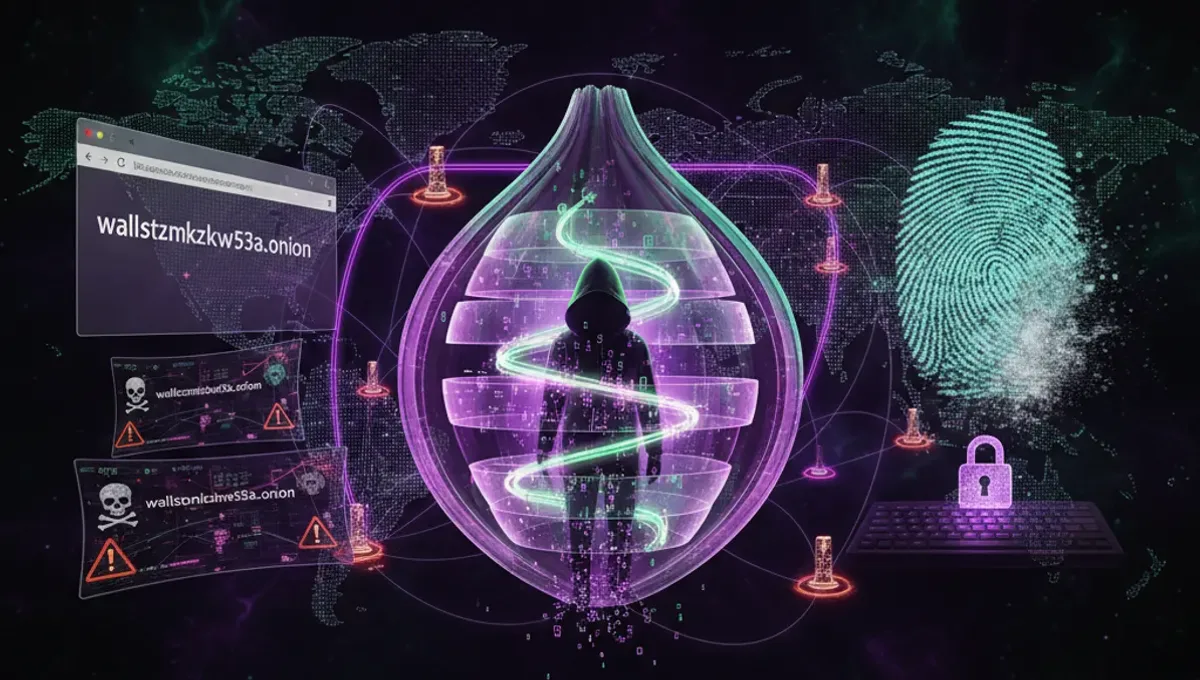
Onion addresses are special domain names that end in .onion and exist only within the Tor network. When you connect to an onion service using the Tor browser, your traffic is encrypted and routed through a series of Tor relays—typically three hops—before reaching the destination. Each relay knows only the previous and next relay in the chain, not the full path or your identity. This layered encryption, called onion routing, means the service operator cannot easily identify your IP address, and your ISP cannot see that you are accessing Tor. V3 onion addresses, the current standard, are 56 characters long and use stronger cryptography than older v2 addresses, making them resistant to enumeration attacks.
Distinguishing Genuine Onion Mirrors from Phishing Clones
Phishing clones are fraudulent copies of legitimate onion services designed to steal credentials, cryptocurrency, or personal information. To verify a genuine onion address, follow these steps:
- Check the official announcement channels or verified sources for the correct .onion address.
- Verify the PGP signature of any address announcement using the service's public key.
- Compare the onion address character-by-character; even a single character difference indicates a different site.
- Check for HTTPS certificates and security indicators within the Tor browser.
- Look for consistent branding, layout, and functionality compared to historical screenshots.
Common phishing tactics include slight misspellings of the .onion address, fake mirror sites claiming the original is down, and social engineering through forum posts or direct messages. Never trust an onion address shared in unverified channels.
Why Darknet Markets Shut Down and Cease Operations
Darknet markets shut down for several reasons: law enforcement operations targeting the server infrastructure, operator exit scams where administrators steal user funds, security breaches exposing user data, or voluntary closure by operators. When a market ceases operations, its .onion address becomes inaccessible, and attempting to connect returns a connection timeout error. Users who had cryptocurrency or account balances on the platform typically lose access to those funds. Some markets publish a final announcement before shutdown; others disappear without warning. The closure of Wallstreet Market and other major darknet markets demonstrates the inherent instability of these platforms and the legal and operational risks they face.
Common Mistakes That Compromise Anonymity on Darknet Markets
Users accessing darknet markets often make operational security errors that undermine their anonymity. These include:
- Running the Tor browser alongside other applications that leak the real IP address.
- Maximizing the browser window, which can reveal screen resolution and aid fingerprinting.
- Disabling JavaScript in the Tor browser settings, which may break site functionality and cause users to enable it unsafely.
- Reusing usernames or email addresses across multiple platforms.
- Providing personal information in marketplace profiles or messages.
- Using the same cryptocurrency wallet address for multiple transactions, allowing blockchain analysis to link purchases.
- Accessing the darknet from a device also used for clearnet browsing without proper compartmentalization.
These mistakes can expose your real identity or link your darknet activity to your offline life.
Comparing Tor, VPN, and I2P for Darknet Access
Tor, VPN, and I2P are three different anonymity networks, each with distinct properties. Tor routes traffic through multiple relays operated by volunteers, providing strong anonymity but slower speeds; it is the standard for accessing onion services. A VPN encrypts traffic through a single provider's server, offering speed but requiring trust in the VPN operator; most VPNs do not support .onion access. I2P is a decentralized network designed for internal communication and file-sharing, with different routing and threat models than Tor; it is not typically used to access onion marketplaces. For accessing darknet markets, Tor is the only practical choice because onion services are designed specifically for the Tor network. Using a VPN in combination with Tor is generally discouraged because it can reduce anonymity and may be detected by exit nodes.
Legal and Safety Considerations for Darknet Research
Accessing the Tor network and onion services is legal in most jurisdictions, but the legality of specific content and transactions varies by country and local law. Merely accessing a darknet marketplace is not illegal; however, purchasing illegal goods or services is a crime. Law enforcement agencies monitor darknet markets and can trace transactions through blockchain analysis, server seizures, and user mistakes. If you are researching darknet markets for academic, journalistic, or security purposes, maintain strict operational security, document your methodology, and avoid any transactions or downloads. Be aware that some onion services host malware, scams, or illegal content; clicking links or downloading files without verification poses significant risks. For information about verified and active marketplaces, consult the Verified Marketplaces page on this site.
Frequently asked questions
Is Wallstreet Market still active
No, Wallstreet Market is no longer operational. The marketplace has ceased functioning, and its .onion address is no longer accessible. Attempting to connect returns a connection timeout. For current information about active darknet markets, refer to the Verified Marketplaces page.
How do I verify a legitimate darknet market onion address
Verify an onion address by checking official announcement channels, confirming PGP signatures using the service's public key, and comparing the address character-by-character against verified sources. Be cautious of addresses shared in unverified channels. Phishing clones often use slightly misspelled addresses to deceive users.
What is a v3 onion address and why does it matter
A v3 onion address is the current standard for Tor hidden services, consisting of 56 characters and using stronger cryptography than older v2 addresses. V3 addresses are resistant to enumeration attacks and provide better security. Most modern darknet services use v3 addresses.
Can I use a VPN with Tor to access darknet markets
Using a VPN with Tor is generally discouraged because it can reduce anonymity and may be detected by Tor exit nodes. Tor alone provides sufficient anonymity for accessing onion services. A VPN does not support .onion access and adds unnecessary complexity.
What happens to my funds if a darknet market shuts down
If a darknet market ceases operations, users typically lose access to any cryptocurrency or account balances held on the platform. There is no recovery mechanism or customer protection. This is one of the significant risks of using darknet markets.