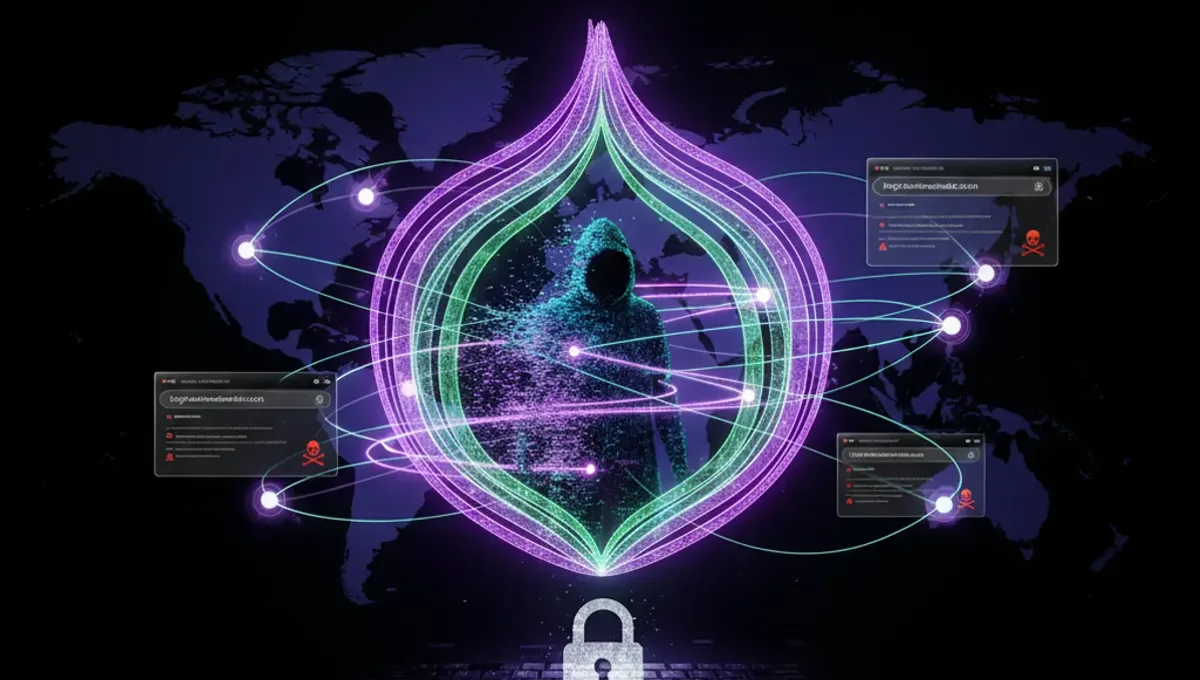
What Are Darknet Links and How Do They Differ from Surface Web URLs?
Darknet links are .onion addresses that point to services hosted on the Tor network, not indexed by conventional search engines and inaccessible through standard browsers. Unlike surface web URLs, which resolve through DNS servers and standard internet infrastructure, .onion addresses are generated cryptographically and route traffic through a series of Tor relays that strip identifying information at each hop. A typical .onion address appears as a string of 56 characters followed by .onion, such as example1234567890abcdefghijklmnopqrstuvwxyz1234567890ab.onion. The Tor Project's official documentation explains that v3 addresses (the current standard) use 256-bit keys for enhanced security compared to older v2 addresses. Darknet marketplaces use these addresses to maintain operational obscurity and resist takedown attempts, though this anonymity also attracts fraudulent operators and phishing clones designed to steal credentials or cryptocurrency.
How Does Tor Routing Protect Darknet Market Traffic?
Tor routing works by passing user traffic through a minimum of three randomly selected relays before reaching the destination server. Each relay decrypts one layer of encryption and forwards the packet to the next relay, meaning no single relay knows both the originating user and the final destination. The Tor Project publishes technical specifications showing that this onion routing design prevents network-level adversaries from correlating incoming and outgoing traffic. When you access a darknet market, your ISP sees only that you are connecting to a Tor entry node; the entry node cannot see your destination; the middle relay sees neither source nor destination; and the exit relay sees the destination but not your identity. This layered encryption model protects market participants from passive surveillance, though it does not guarantee anonymity if users compromise their own operational security through browser fingerprinting, DNS leaks, or reuse of usernames across platforms.
What Are v3 Onion Addresses and Why Do Current Darknet Markets Use Them?
v3 onion addresses are the current standard for Tor hidden services, introduced to address cryptographic weaknesses in the older v2 format. v3 addresses use 256-bit keys instead of 1024-bit RSA keys, making them resistant to brute-force attacks and future quantum computing threats. They are 56 characters long and include a checksum that prevents typos from silently routing users to wrong destinations. According to Tor Project documentation, v2 addresses were deprecated in 2021 because they were vulnerable to certain attack vectors. Modern darknet marketplaces have migrated to v3 addresses to reduce the risk of domain hijacking and impersonation. When verifying a marketplace link, confirm it uses the v3 format and check the address against multiple independent sources, as phishing clones often use similar-looking v2 addresses or slightly altered v3 strings to deceive users.
How to Identify Legitimate Darknet Market Links vs. Phishing Clones
Phishing clones are fraudulent copies of legitimate darknet marketplaces designed to steal login credentials, cryptocurrency, or escrow funds. Several techniques help distinguish genuine markets from fakes:
- Verify the .onion address against multiple independent sources, including archived announcements and community forums, to confirm the official link.
- Check for PGP signatures on marketplace announcements; legitimate operators publish signed statements using a consistent key that can be verified against historical records.
- Examine SSL certificate details if the market uses HTTPS; legitimate operations often display transparency about their infrastructure.
- Look for consistent branding, design, and functionality; clones often contain typos, broken links, or missing features.
- Test with a small transaction before committing significant funds; scam sites may accept deposits but refuse withdrawals.
- Cross-reference user reviews on established forums and subreddits, though note that reviews themselves can be faked.
Phishing sites often appear within hours of a legitimate market experiencing downtime, exploiting user confusion to harvest credentials. Never click marketplace links from untrusted sources; always type the address manually or use bookmarks from verified sources.
What Are the Key Differences Between Top Darknet Markets?
Active darknet markets vary in their operational models, fee structures, dispute resolution mechanisms, and security practices. Some markets operate as centralized platforms with escrow services and built-in dispute resolution, while others function as decentralized directories with minimal operator involvement. Differences include whether markets require account verification, support multi-signature transactions, offer two-factor authentication, maintain transparency logs, or publish regular security audits. Best darknet markets typically feature established reputation systems, transparent fee schedules, and responsive operator communication. Current darknet markets may differ in supported cryptocurrencies, with some accepting only Bitcoin while others support Monero or other privacy coins. Vendor quality and product availability vary significantly between platforms, as does the prevalence of scams and exit fraud. Comparing darknet markets requires examining user feedback, uptime records, and operator history, though historical data is often incomplete due to law enforcement takedowns and voluntary shutdowns. For detailed comparisons of specific platforms, refer to the Verified Marketplaces page on this site.
What Operational Security Mistakes Compromise Anonymity on Darknet Markets?
Common OpSec failures that expose darknet market users include:
- Reusing usernames across multiple platforms, allowing correlation of accounts even if each uses Tor.
- Enabling JavaScript in the Tor Browser, which can leak the real IP address through certain exploits.
- Maximizing the browser window, allowing fingerprinting attacks to identify the user's screen resolution and operating system.
- Mixing Tor and non-Tor traffic by accessing the same accounts or services on both networks.
- Providing personally identifying information in usernames, addresses, or communications.
- Using the same cryptocurrency wallet across multiple markets, creating a permanent transaction history.
- Accessing darknet markets from the same device used for regular internet activity without proper isolation.
- Failing to update the Tor Browser regularly, leaving known vulnerabilities unpatched.
- Trusting market operators with sensitive data; assume all platforms may be compromised or operated by law enforcement.
- Conducting large transactions without understanding cryptocurrency mixing and traceability.
Each mistake reduces anonymity incrementally; a combination of errors can completely deanonymize a user despite using Tor.
How Do Tor, VPN, and I2P Compare for Accessing Darknet Markets?
Tor, VPN, and I2P are distinct anonymity networks with different threat models and use cases. Tor routes traffic through multiple relays operated by volunteers worldwide, providing strong anonymity against network surveillance but slower speeds due to the multi-hop design. The Tor Project maintains that Tor is specifically designed for accessing hidden services and resisting traffic analysis. VPNs encrypt traffic between the user and a single provider's server, offering faster speeds but concentrating trust in the VPN operator, who can see all unencrypted traffic. I2P is a decentralized network designed for peer-to-peer communication with shorter path lengths than Tor, resulting in faster speeds but less mature security auditing. For accessing darknet markets, Tor is the standard because markets are designed as Tor hidden services and require the Tor Browser to function properly. Using a VPN with Tor adds an extra encryption layer but does not improve anonymity against a determined adversary and may introduce additional vulnerabilities. I2P is not suitable for accessing .onion markets because they do not operate on the I2P network. The Tor Browser is purpose-built to prevent fingerprinting and timing attacks specific to hidden service access.
Frequently asked questions
Are all darknet markets illegal?
No. Darknet markets themselves are neutral infrastructure; legality depends on what is bought and sold. Some markets host legal goods and services, while others facilitate illegal transactions. The Tor network and .onion addresses are legal tools used for legitimate privacy purposes by journalists, activists, and privacy-conscious individuals. However, many well-known darknet markets have been shut down by law enforcement for facilitating drug trafficking, weapons sales, and other crimes.
How do I know if a darknet market link is real?
Verify the .onion address against multiple independent sources, check for PGP signatures from the operator, and look for consistent branding and user reviews. Legitimate markets publish official announcements on established forums and maintain consistent addresses over time. Phishing clones often appear during market downtime and use slightly altered addresses. Never trust a link from a single source; cross-reference with community forums and archived records before accessing any marketplace.
What is the difference between a v2 and v3 onion address?
v3 addresses are 56 characters long and use 256-bit encryption, while v2 addresses are 16 characters and use weaker 1024-bit RSA keys. v2 addresses were deprecated by the Tor Project in 2021 due to security vulnerabilities. All current darknet markets should use v3 addresses. If you encounter a v2 address claiming to be a modern marketplace, it is likely a phishing clone or an outdated link.
Can I use a VPN instead of Tor to access darknet markets?
No. Darknet markets are .onion hidden services that only function through the Tor network. A VPN will not allow you to access them. Additionally, using a VPN with Tor does not improve anonymity and may introduce vulnerabilities. The Tor Browser is the correct tool for accessing darknet markets safely.
What should I do if I suspect a marketplace is a phishing clone?
Do not log in or send funds. Compare the address with verified sources, check for PGP signatures, and look for design inconsistencies. Post your concerns on established forums to warn other users. If the legitimate market is still operational, contact the operators through their official channels to report the clone. Law enforcement agencies also accept reports of phishing and fraud.